OCPP Integration Webasto Chargers
This guide describes how to connect Webasto chargers to the Sintio portal via OCPP. Before starting the configuration, ensure that the charger is reachable on your network and that the latest firmware is installed (version 5.11.3-10155-5d97e1274).
Webasto Live
Identify the charger in your local network using an IP scanner. Alternatively, the station provides its own Wi-Fi access point, which you can connect to for initial setup.
Network Configuration
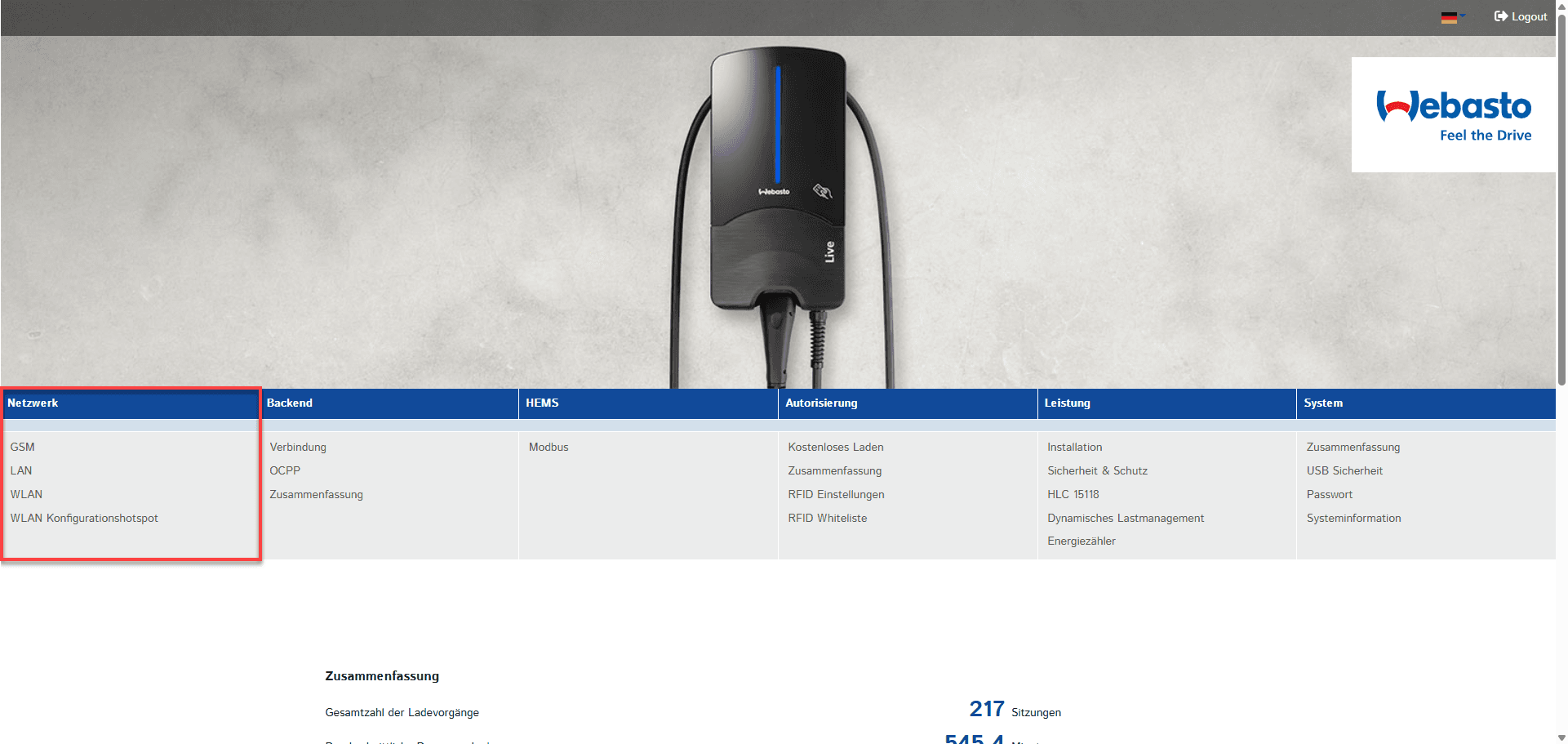
In the web interface, navigate to the Network tab. This section allows you to configure the network connection — a prerequisite for connecting to an OCPP backend.
The Webasto Live station supports both LAN and Wi-Fi connections.
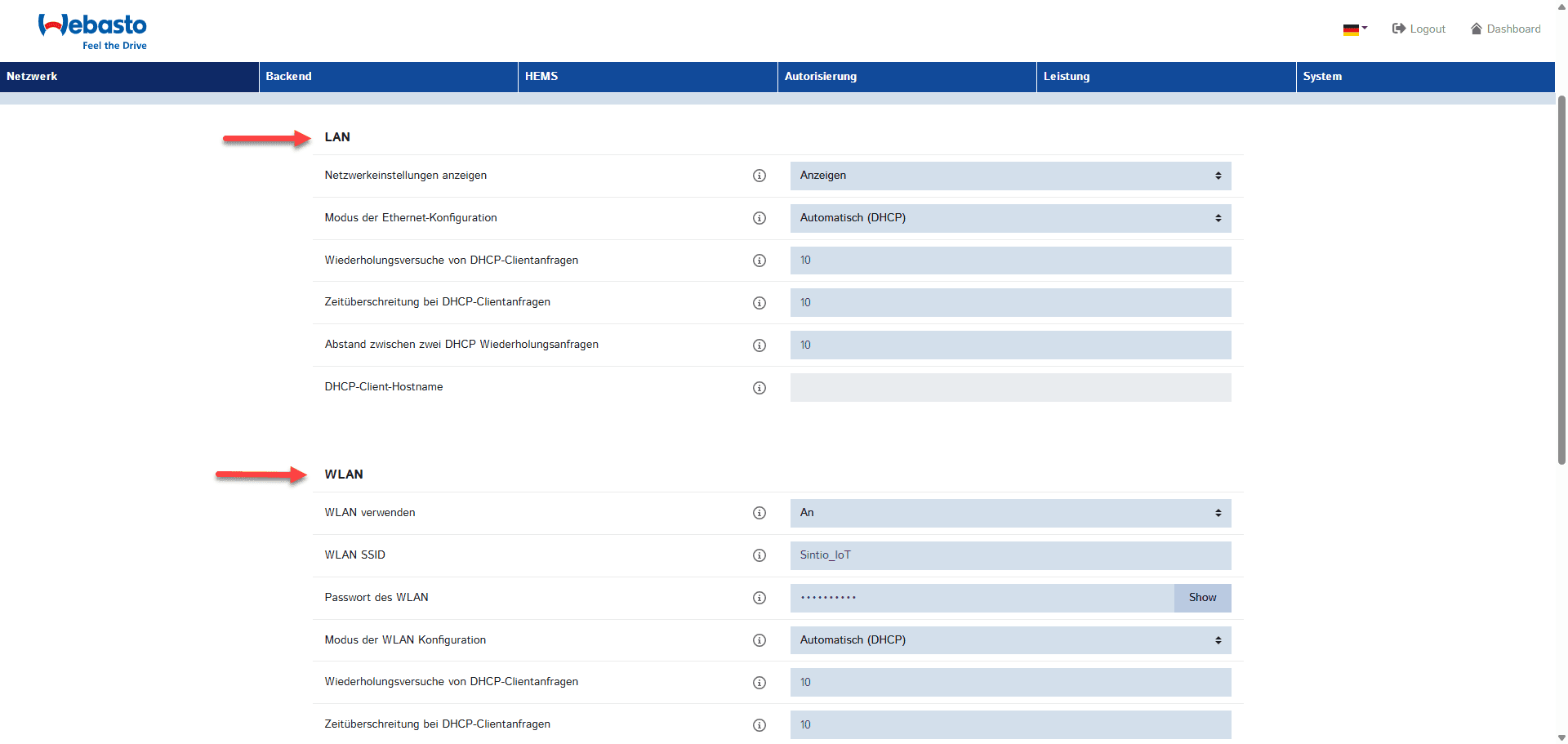
It is recommended to configure both LAN and Wi-Fi networks where possible, to ensure connection redundancy.
Backend Settings
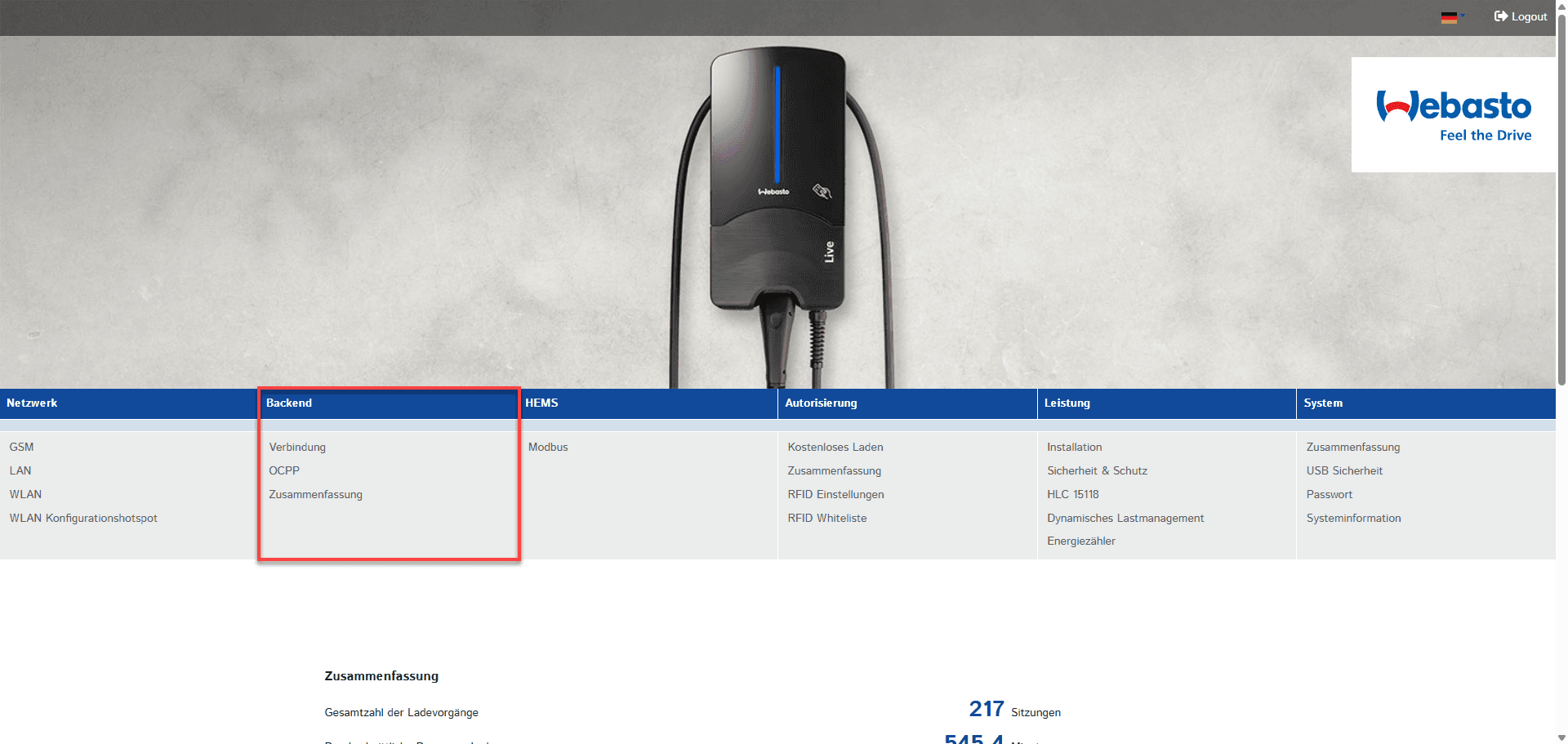
Navigate to the Backend menu.
Operating with multiple backends at the same time is not supported.
OCPP Configuration
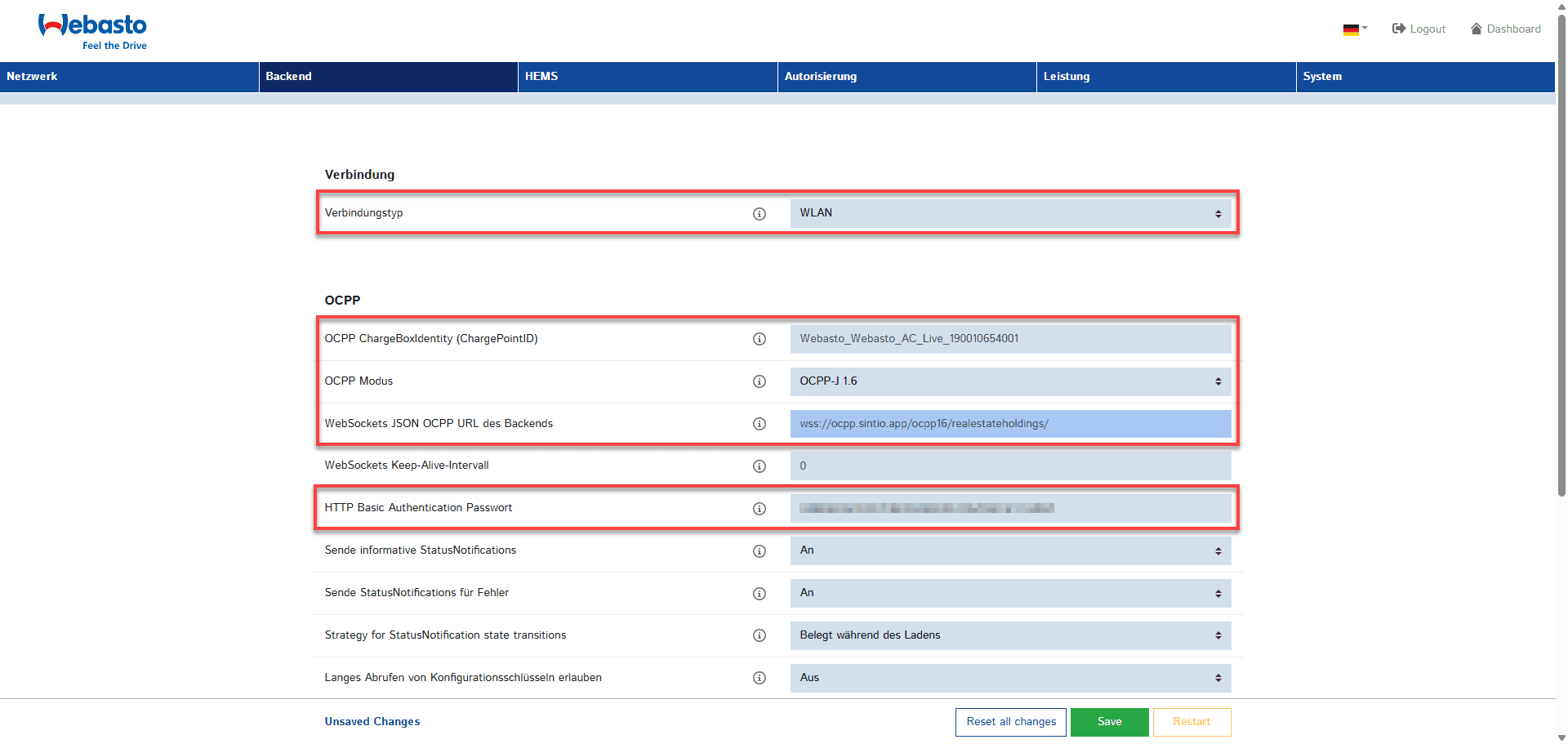
Configure the necessary OCPP parameters as shown in the table below. Use the screenshot above as a reference.
| Input Field | Value |
|---|---|
| Connection Type | Wi-Fi or LAN |
| OCPP Mode | OCPP-J 1.6 |
| WebSockets JSON OCPP Backend URL | wss://ocpp.sintio.app/ocpp16/your-organisation-name/ |
| HTTP Basic Authentication Password | Password provided by the Sintio portal |
SSL / TLS Settings
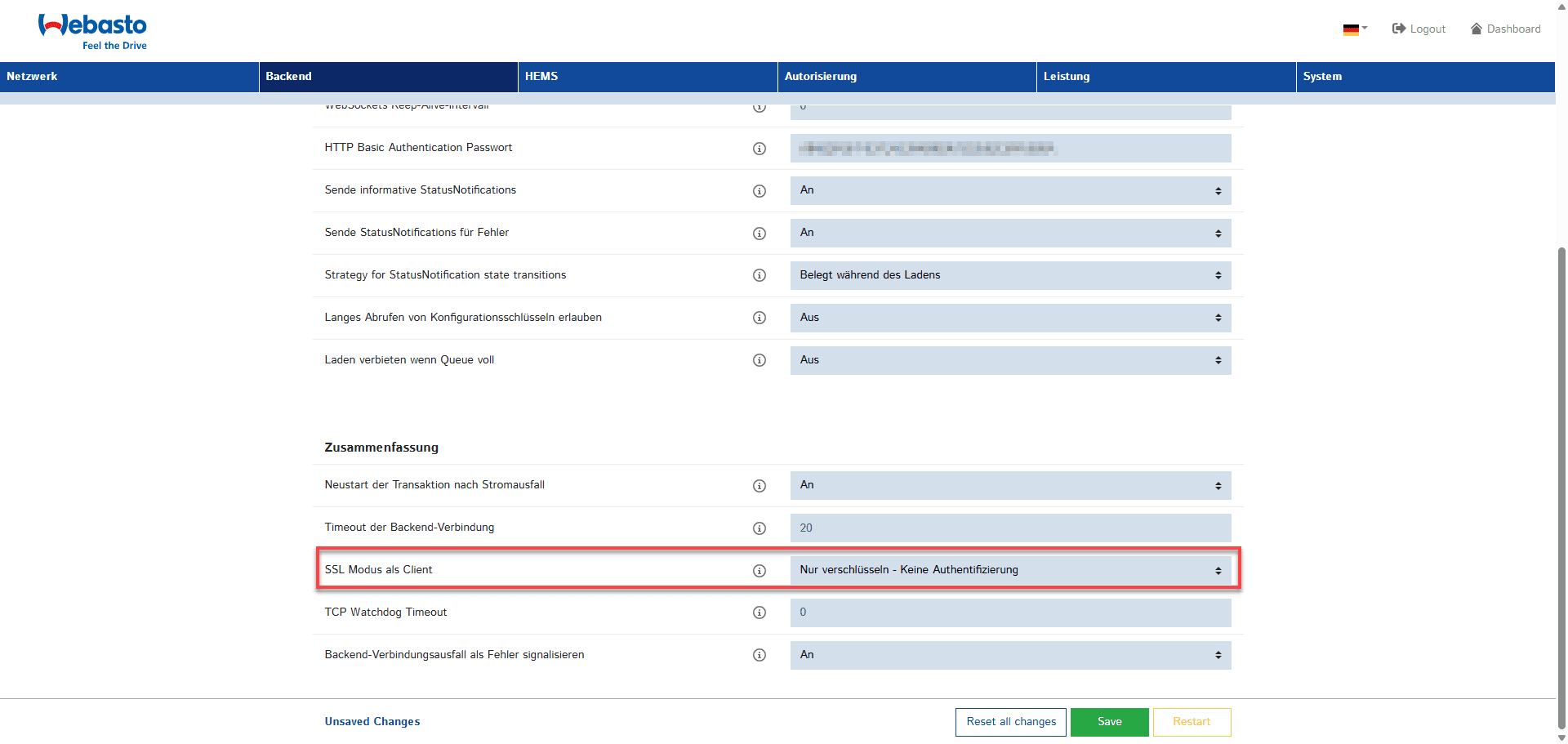
Under Summary, set the SSL Client Mode to Encrypt only – No authentication.
| Input Field | Value |
|---|---|
| SSL Client Mode | Encrypt only – No authentication |
RFID Whitelist
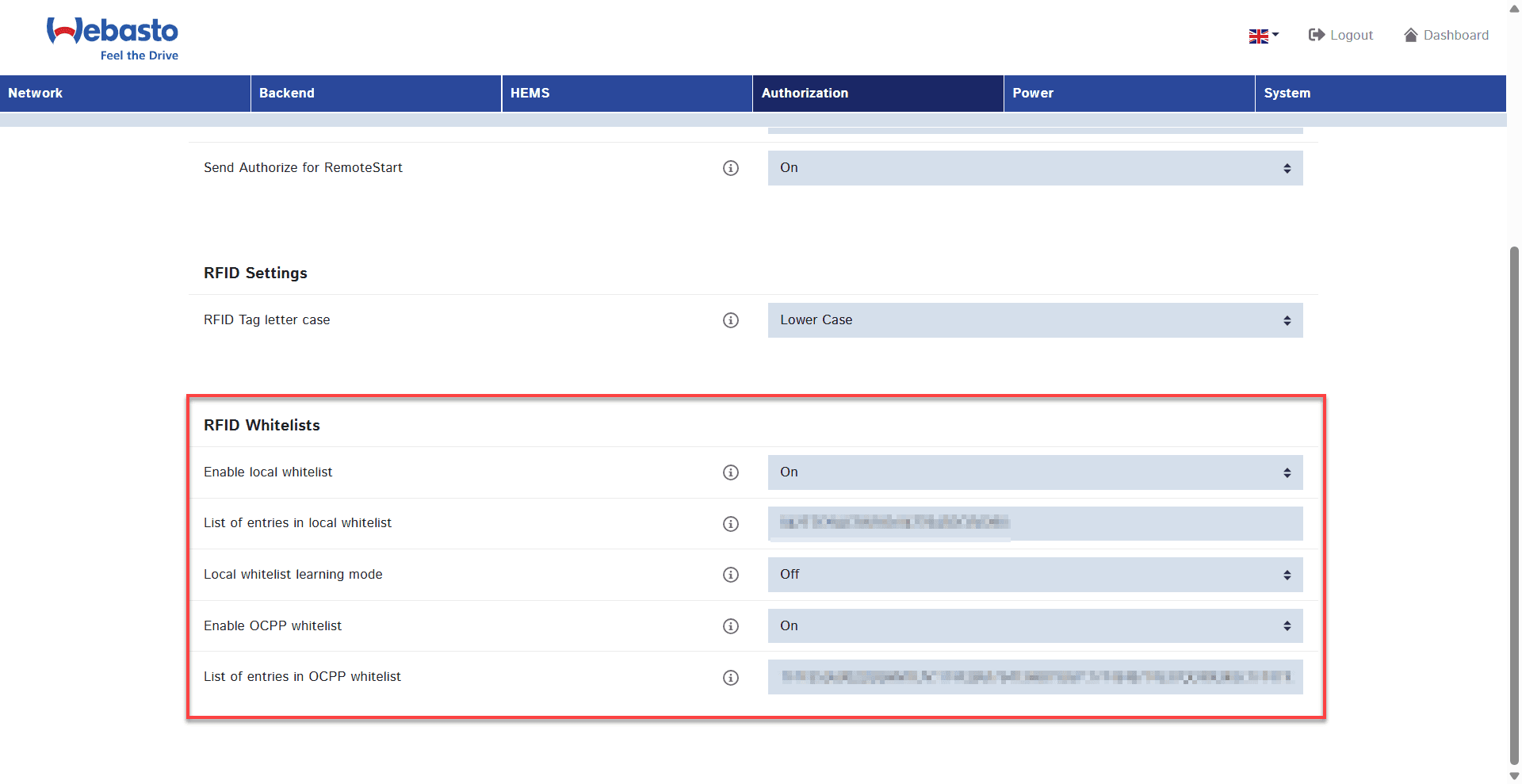
To enable offline charging (service for sintio.fullservice customers), you must make the following settings in the Authorization menu item.
Save and Reboot
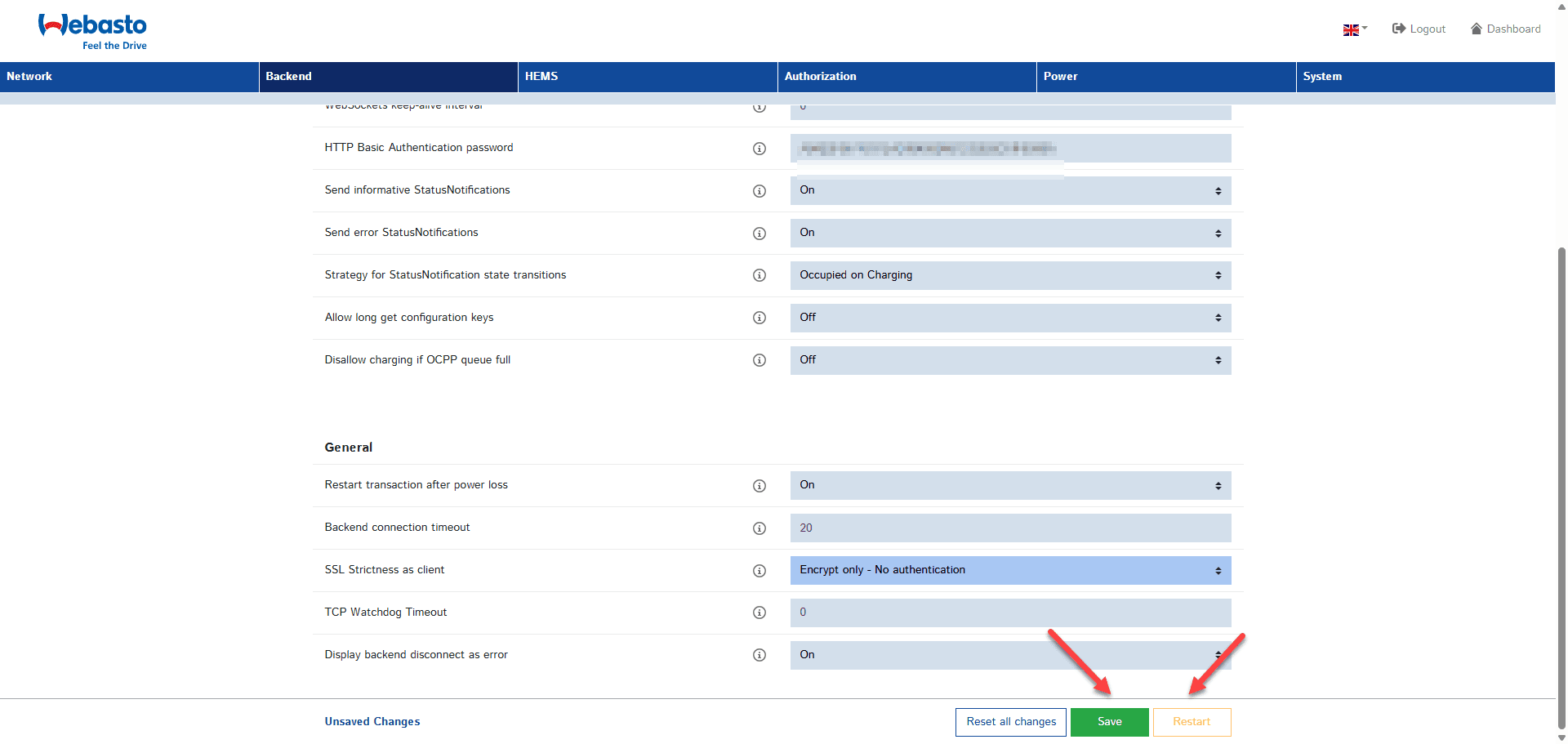
Once configuration is complete, save the settings and reboot the station. Only after rebooting will the station initiate a connection to the specified OCPP server.
After the reboot, the charger will automatically start establishing a connection with the OCPP server and will appear in the Sintio portal under Chargers.